Divination Tarot
Alternative Names: Fortune-telling Tarot, Esoteric Tarot
In the context of modern cartomancy, Divination Tarot decks are those that adhere to the traditional structure of the major arcana—the twenty-two allegorical trump cards central to esoteric interpretation. These decks typically feature the imperial arcana (Empress, Emperor, Popess/High Priestess, Pope/Hierophant), the cardinal virtues (Strength, Justice, Temperance), and celestial figures such as the Star, Moon, and Sun. While initially designed for the trick-taking game known as trionfi (triumphs) in the 15th century, these decks were later repurposed for divination. Today, the category encompasses both the historical patterns used for gaming and the dedicated esoteric decks developed from the late 18th century onward.


Decks


History
Origins in the Italian Renaissance
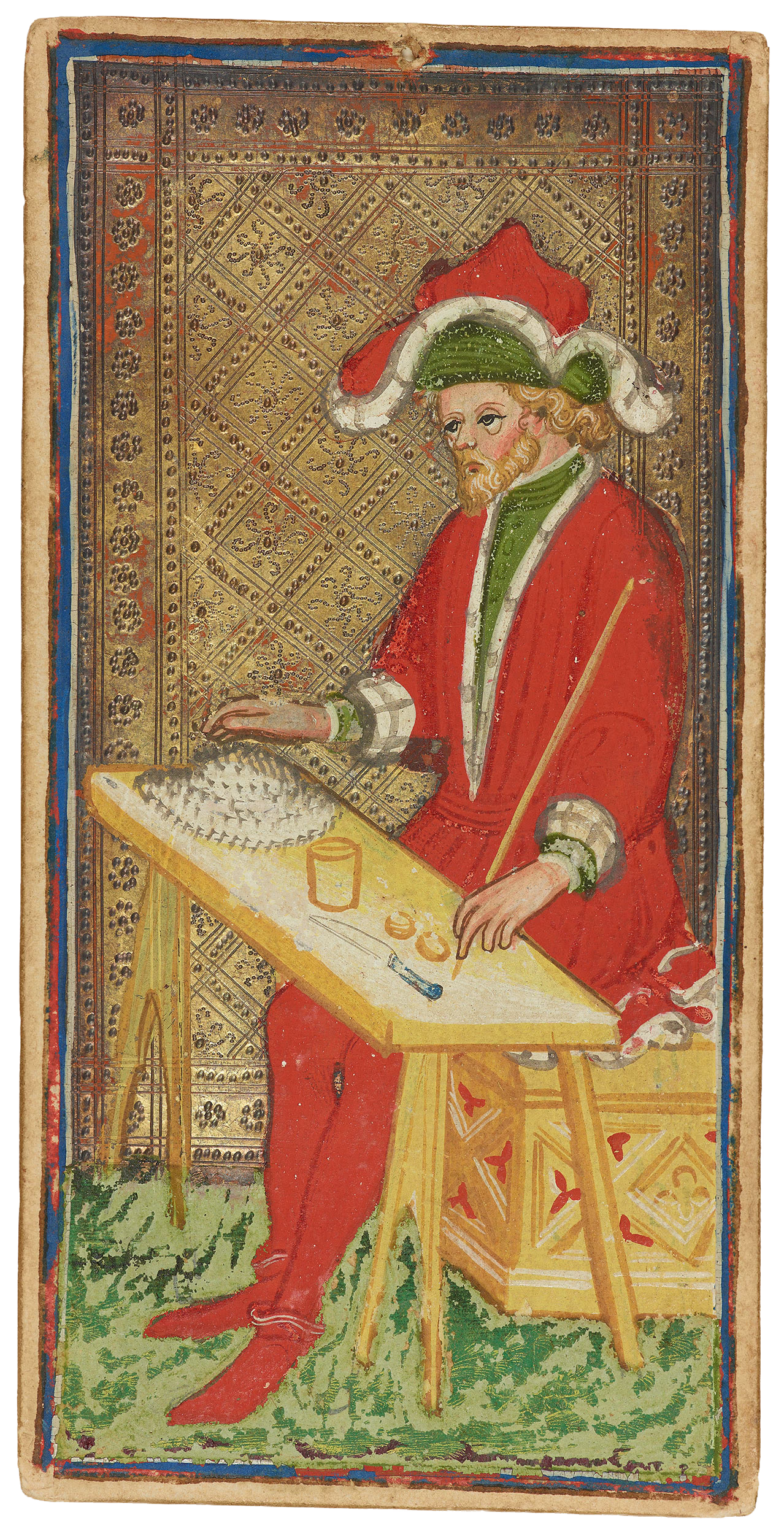
The structural foundation of the Divination Tarot was laid in northern Italy during the early Renaissance. The earliest surviving decks, now known collectively as the Visconti-Sforza Tarot, were commissioned by the ruling families of Milan in the early 1440s. These were not mystical tools but luxury goods used for Ludus Triumphorum (the Game of Triumphs). From Milan, the use of Tarot spread to other cultural hubs including Bologna, Ferrara, and Florence [1] . By the end of the 15th century, the game had become a staple leisure activity throughout the Italian peninsula.
A standard Tarot deck generally consists of 78 cards: 22 major arcana (trumps) and 56 minor arcana divided into four suits (Cups, Coins, Swords, and Batons). The minor arcana include 40 pip (numeral) cards and 16 court cards.
Regional Variations and Deck Composition
As the game spread, regional preferences dictated the composition of the deck. This resulted in several distinct patterns that historians study today to trace the migration of playing card culture.
One of the most elaborate variations, known as Minchiate, emerged in Florence around 1500. Originally called Germini, this deck expanded the major arcana to 41 cards, creating a massive 97-card deck. It retained most of the standard trumps but added the twelve signs of the Zodiac, the four elements, and the theological virtues to the standard cardinal ones [2] .
Conversely, other regions reduced the deck size to accelerate gameplay:
- Tarocchino Bolognese: A 62-card deck popular in Bologna, created by removing the 2s, 3s, 4s, and 5s of each suit.
- Tarocco Siciliano: A 63-card variant from Sicily, which removed the Aces and low pips (2 through 4), with the notable exception of the 4 of Coins, which was retained for taxation stamps [3] .
Structural and Iconographic Evolution
The ordering of the trumps—a critical factor for occultists—was never historically uniform. In early Italian decks, the positions of the virtues varied significantly. Strength often appeared as VIII (8) and Justice as XI (11), though these positions were frequently swapped depending on the region. Furthermore, the iconography evolved; in the Bolognese pattern, the Last Judgement is depicted as an Angel, though the artistic function remains similar [2] .
A notable variance occurs in the highest trumps. In the standard order, the Last Judgement is typically card XX (20) and the World is XXI (21). However, in the Bolognese tradition, the order is reversed, with the World appearing as the second-highest trump and the Angel (Judgement) as the highest. This inversion reflects the ranking of cards in the specific trick-taking games played in Bologna [2] .
Artistically, the 15th-century decks were non-uniform. Hand-painted luxury decks like the Cary-Yale and Brera-Brambilla Visconti-Sforza sets utilized unique iconographic schemes drawn from Renaissance art, depicting distinct versions of Faith, Hope, Charity, and the hierarchy of power (Dummett 1980, 68–76; Kaplan 1978, vol. 1, 63–107).
Expansion to France and the “Classic” Patterns
From the late 15th century onward, Tarot migrated across the Alps into France, Switzerland, and the Germanic states. As mass-printing techniques replaced hand-painting, designs stabilized into recognized “patterns.”
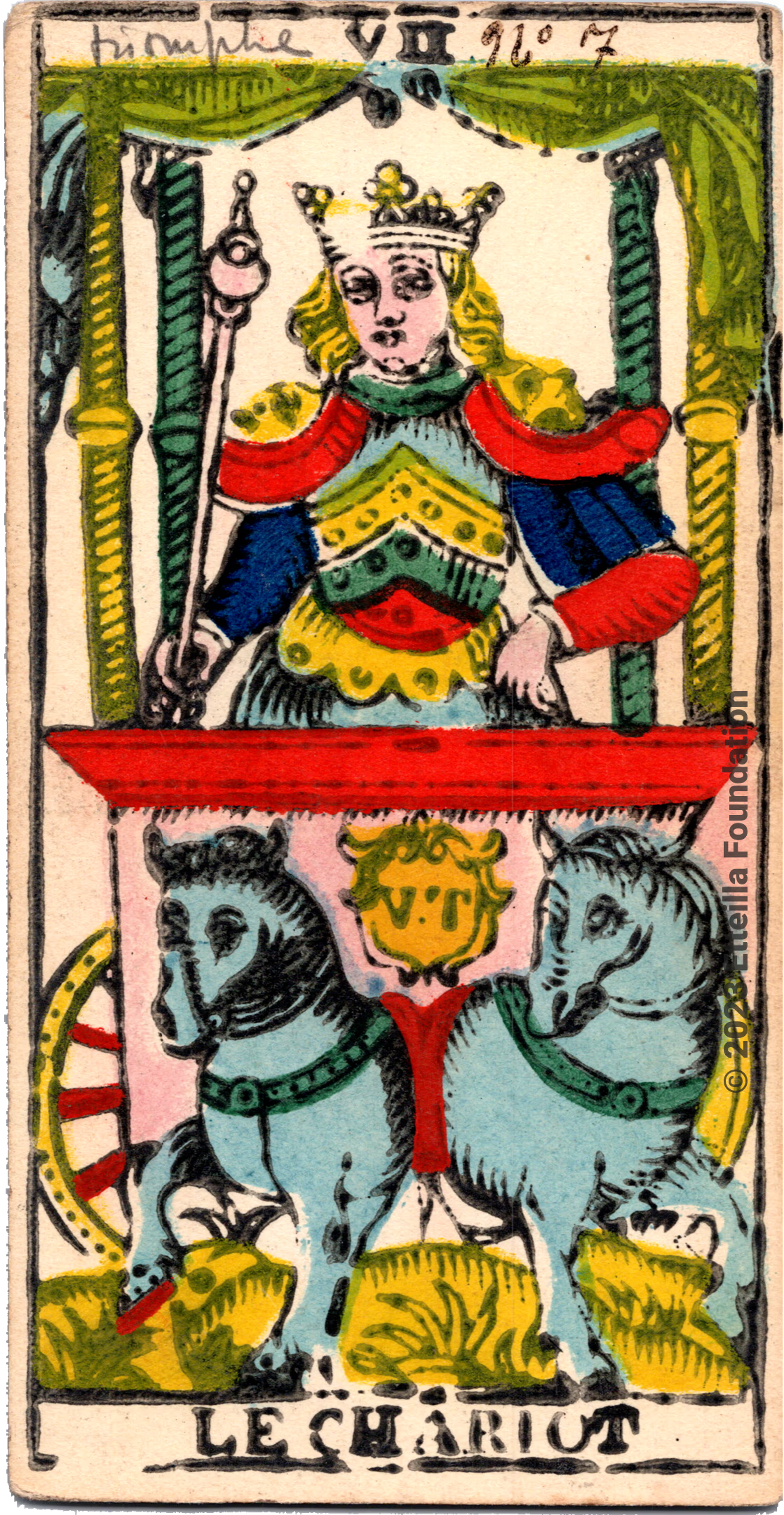
The most enduring of these is the Tarot de Marseille, which crystallized in France during the 16th and 17th centuries. Characterized by woodblock printing and bold, primary colors, this pattern became the template for most subsequent esoteric decks [4] .
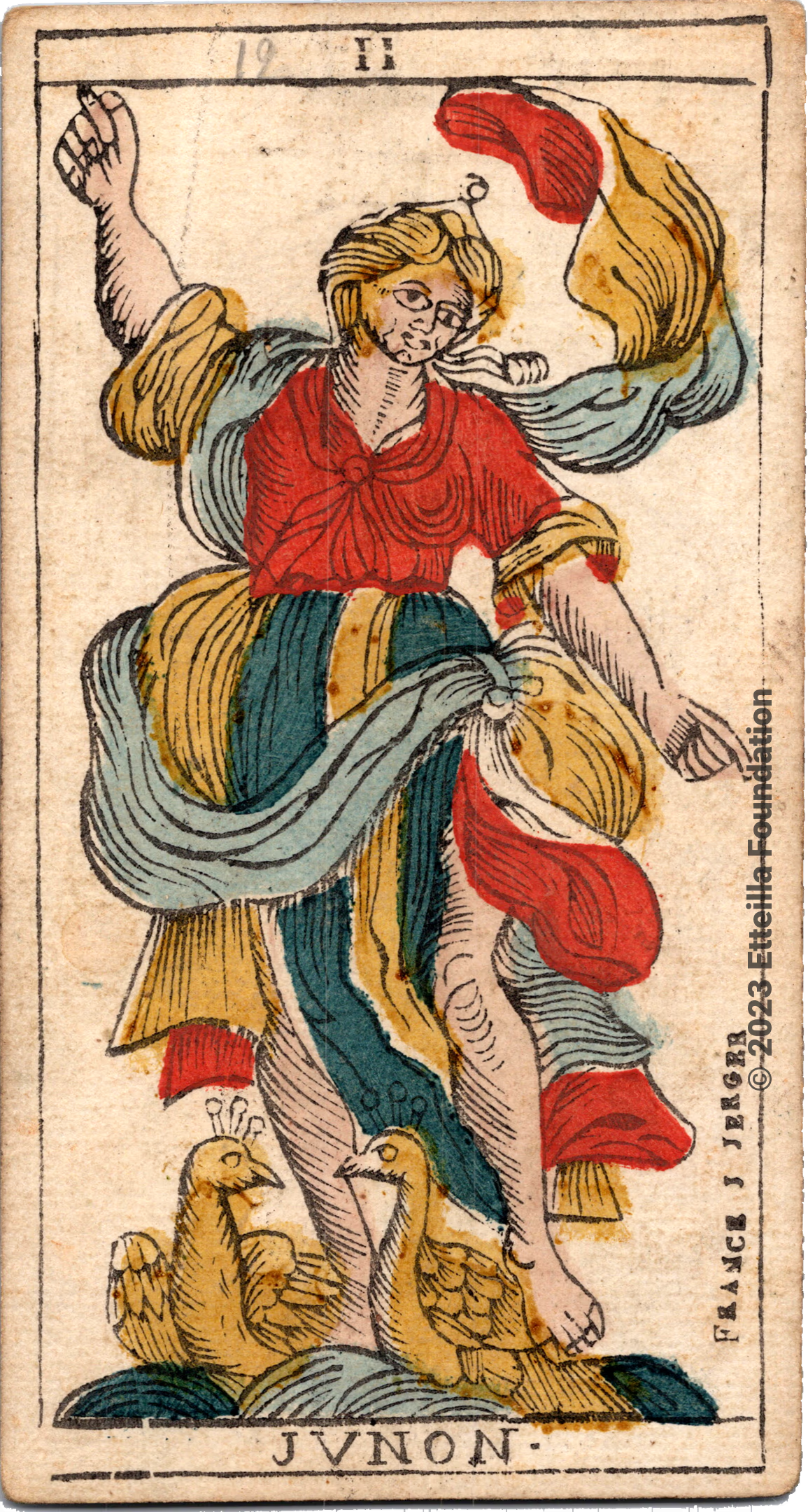
A parallel development occurred with the Tarot de Besançon, a pattern popular in eastern France, Switzerland, and Germany. Likely to appease Protestant sensibilities or avoid conflict with religious authorities, this pattern replaced the controversial Popess and Pope cards with the Roman deities Juno and Jupiter [2] .
In Austria, Germany, and the Low Countries, the game evolved in a different direction. The Animal Tarot (or Tiertarock) replaced the traditional allegorical trumps entirely with scenes of animals, folklore, or rural life. These decks were designed strictly for gaming, moving away from the imagery that would later fascinate occultists (Kaplan 1986, vol. 2, 412–415).
The Occult Shift (1780s–1900)
The transformation of Tarot from a card game to a divination tool began in earnest during the late 18th century. In 1781, French pastor and scholar Antoine Court de Gébelin published Le Monde primitif, proposing that Tarot cards were the surviving pages of an ancient Egyptian book of wisdom.
Building on this theory, Jean-Baptiste Alliette (writing under the pseudonym Etteilla) became the first professional cartomancer. In 1791, shortly before his death, he released a deck explicitly designed for divination, correcting what he believed were “errors” in the Marseille pattern to align with hermetic philosophy (Decker, Depaulis, and Dummett 1996, chap. 4).
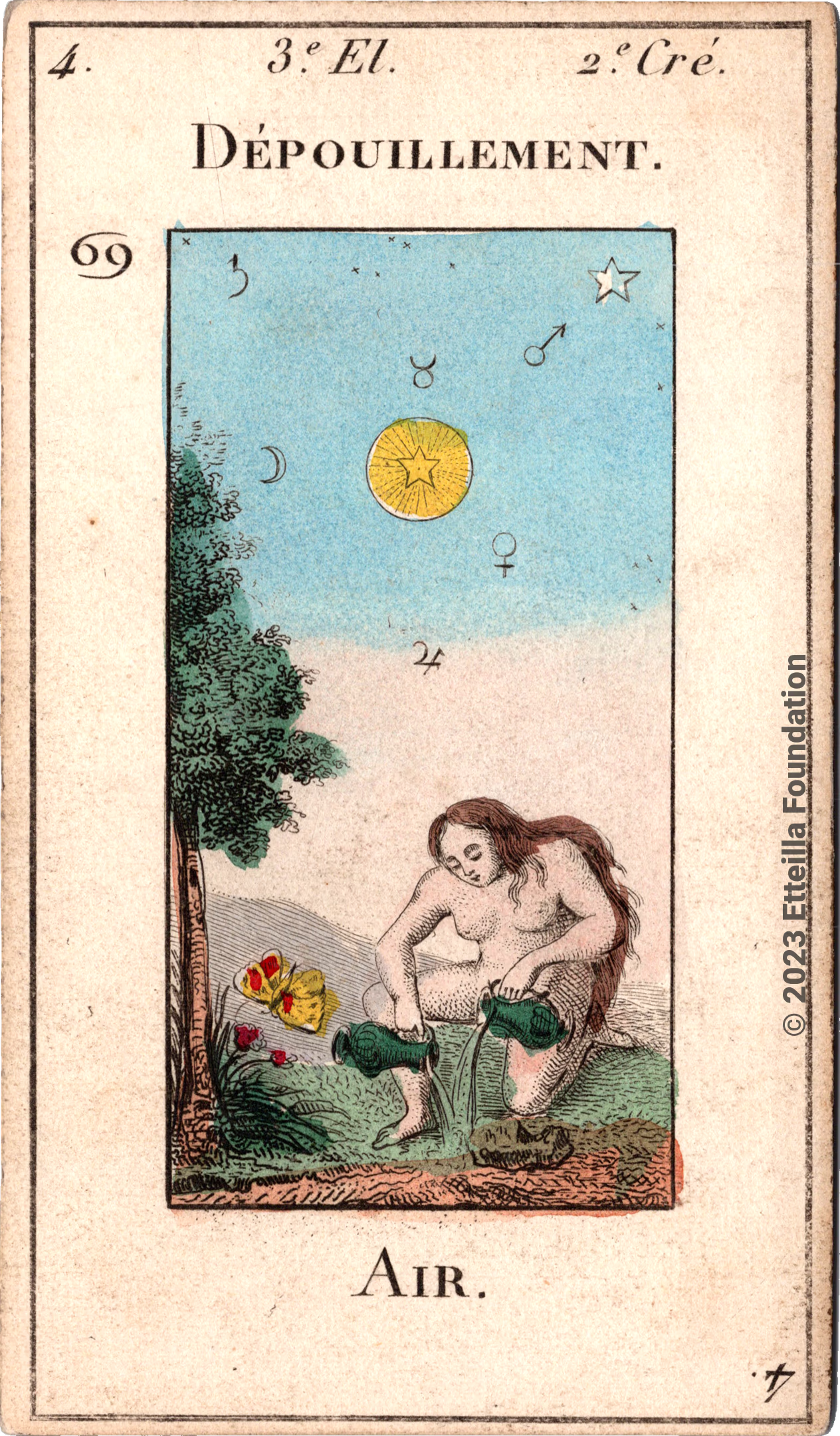
Etteilla’s work catalyzed a wave of French occult tarot. In 1838, publisher Simon-François Blocquel released the Grand Livre de Thot (Etteilla II), cementing the “Egyptian” aesthetic in French fortune-telling [5] . Meanwhile, traditional patterns like the Piedmontese Tarot continued to evolve purely for gameplay in Italy [2] .
The Golden Dawn and the Modern Revival
While the Anglophone world had encountered Italian tarot cards as curiosities during the Grand Tour eras—evidenced by Robert Smith’s 1803 article on Minchiate in Archaeologia [6] —widespread usage did not occur until the late Victorian era.
The Hermetic Order of the Golden Dawn, a British secret society active in the late 19th century, integrated Tarot into their complex system of magical correspondences. Founders William Wynn Westcott and Samuel MacGregor Mathers studied French esoteric decks, eventually leading two members of the order to revolutionize the medium (Decker and Dummett 2002, chaps. 3–5).
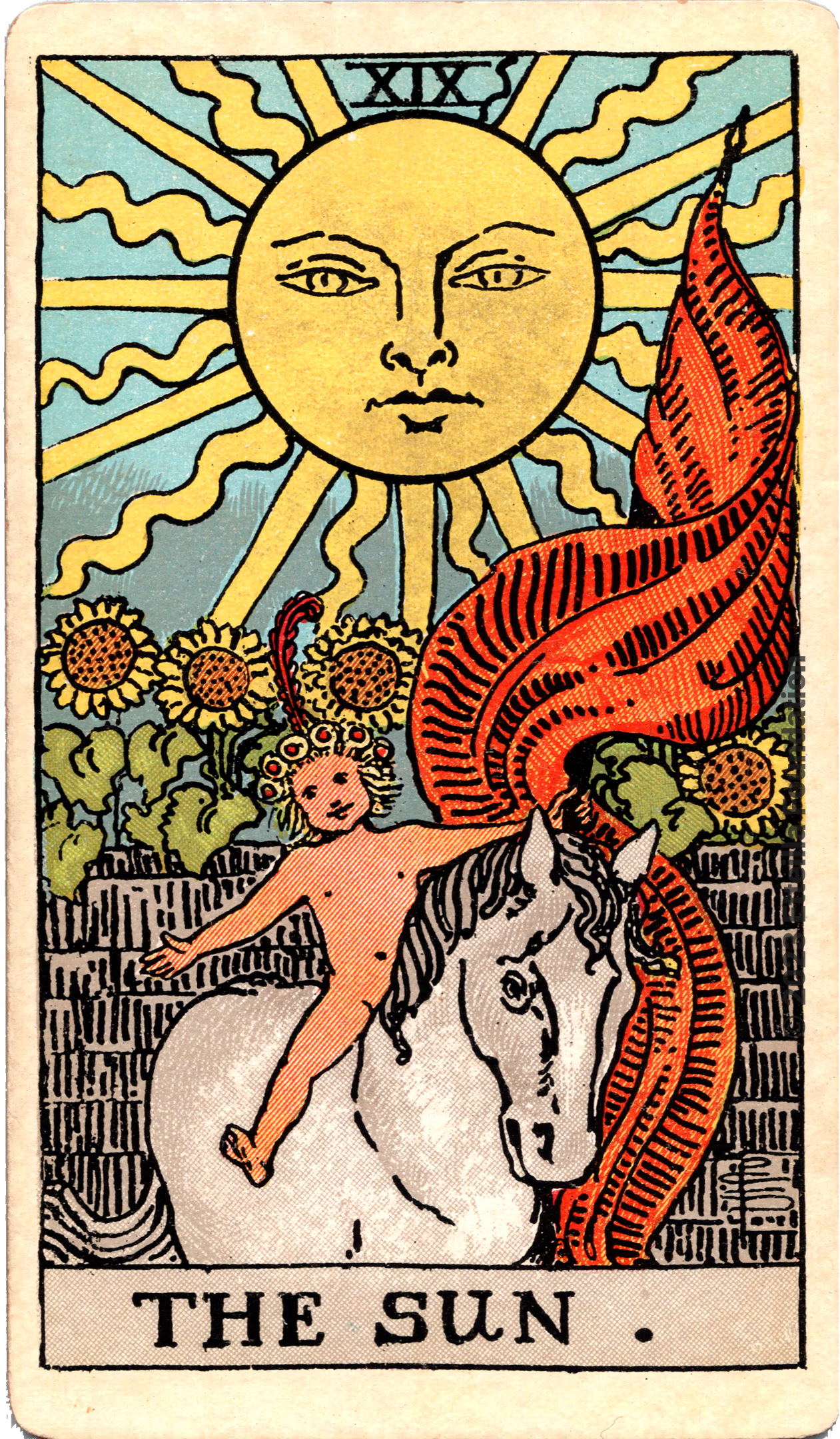
- The Waite-Smith Tarot (1909): Arthur Edward Waite collaborated with artist Pamela Colman Smith to create a deck that utilized fully illustrated scenes for the minor arcana (pips), rather than simple arrangements of suit symbols. This innovation made the deck significantly more accessible for intuitive divination and it remains the industry standard (Decker and Dummett 2002, chap. 8).
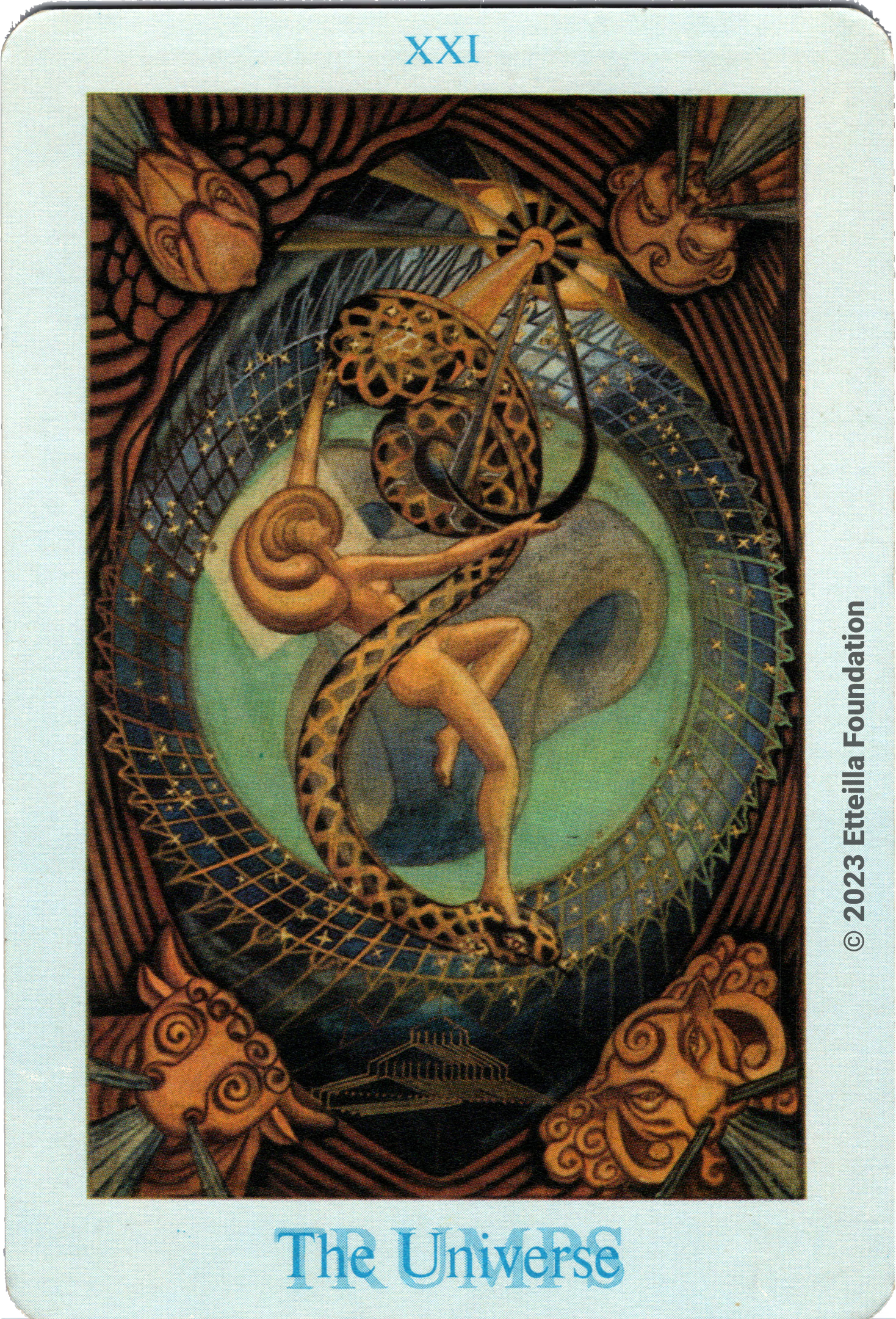
- The Thoth Tarot (1944): Aleister Crowley worked with Lady Frieda Harris between 1938 and 1944 to create a deck dense with kabbalistic and astrological symbolism. Originally published as illustrations in The Book of Thoth, it radically departed from visual tradition (Decker and Dummett 2002, chap. 9; Crowley 1944).
Contemporary Resurgence
The counterculture movement of the late 1960s sparked a massive revival in Tarot. Publishers like Llewellyn and Weiser brought esoteric texts to the mass market. In 1971, Stuart Kaplan, founder of U.S. Games Systems, secured the rights to the Waite-Smith deck, ensuring its global ubiquity (Kaplan 1990, vol. 3, preface 1–45). Simultaneously, the Crowley-Harris Thoth deck, previously available only in rare editions, was mass-produced, allowing a new generation to access Crowley’s complex system [7] .
Today, the market includes thousands of “Divination Tarot” decks, ranging from faithful historical facsimiles of the Visconti-Sforza to modern artistic reinterpretations, all rooted in the structural archetypes established over five centuries ago.
References
Manufacturers
A. Camoin & Cie
1 decks
A.G. Müller
1 decks
Bordoni & Co.
1 decks
Etteilla
1 decks
Ferdinando Gumppenberg
1 decks
Fratelli Avondo
1 decks
Llewellyn Worldwide
2 decks
Red Wheel/Weiser
1 decks
Rigel Press Ltd.
1 decks
U.S. Games Systems
2 decks
William Rider & Son
1 decks
Z. Lismon (Simon-François Blocquel)
1 decks